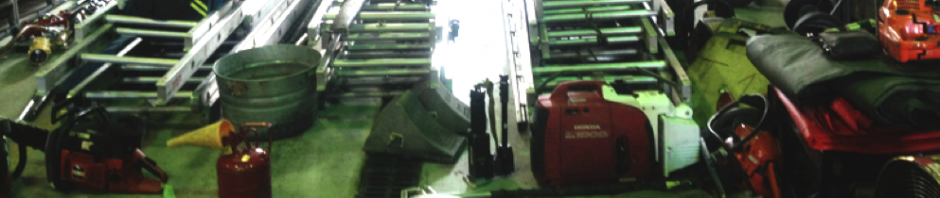
THE HOOK + LADDER UNIVERSITY “CAMPUS.” Hook + Ladder University isn’t a typical college and it doesn’t have a typical campus. Its campus is the street and training ground– the fire departments and people who do “truck work,” whether they operate from a ladder truck or just rob tools off the engine to get the job done.
H+LU’S MISSION. But, H+LU does have a mission, modeled after the writings of Dr. Ernest L. Boyer. In 1990, he wrote the book, “Scholarship Reconsidered: Priorities of the Professoriate.”** It [certainly] targeted at the firefighter. But, his most significant contribution was applicable to the fire service. He defined four important types or research or scholarship, which are interesting to think about in terms of fire protection issues:
- Discovery: Spotlighting new, original exploration and ideas that advance the knowledge of a field.
- Integration: Tying together existing information (often from different disciplines) in ways that amplify its value.
- Application: Refining information in ways that enhances its relevancy and practicality
- Teaching: Exploring methods of maximizing and authenticating the communication and retention of knowledge and skill.
In its simplicity, Boyer’s model provides a useful goal structure for any one-room university of truck company operations:
- Document and interpret the history and theory of fire service [truck, rescue and squad-related] “support operations” in the U.S. and elsewhere.
- Make a few new discoveries and generate some new ideas here and there.
Here, H+LU will try to:
- Find ways that existing information and new developments– from both inside and outside of the fire service– can be reinterpreted to provide new insight.
- Seek out and attempt to disseminate the leading edge thinking of regional and national agencies, institutions, publications and author/scholars.
- Pass along a wide range of information from raw ideas to time-tested knowledge, tools, and methods as studied in some of the most prestigious schools of Trucknology in the world– American firehouses.
- Finally, contribute to the growing body of literature and ideas aimed at enhancing commitment to and the effectiveness of training on hook and ladder functions and their safe, efficient delivery on the emergency scene.
- It won’t offer any of the benefits of a, well-groomed brick and mortar campus. But, if you count passing along the knowledge invested in the training rooms, standard operating guidelines and day-to-day practices of of fire stations everywhere as educational, it will make its contribution to the field of emergency support operations.
Every effort will be made to give fair and accurate credit to the original sources of the concepts discussed. Corrections and alternative points of view will always be welcomed. From time-to-time, the merits of contrasting ideas or methods will be compared.
KEEP THE FAITH. “Truck work” (support operations, in general) is a religion, of sorts; keep the faith.
**Boyer, E. L. (1990). Scholarship reconsidered: Priorities of the professoriate. Princeton, N.J: Carnegie Foundation for the Advancement of Teaching.


